
Editor’s note: This article was updated on October 22, 2025, to correct an inaccuracy regarding IANTD’s position on the revised guidelines.
Why This Guideline Matters Now
Diving’s oxygen exposure limit risks are getting a major reset for 2025. National Oceanic and Atmospheric Administration (NOAA), Diver Alert Network (DAN), American Academy of Underwater Sciences (AAUS), and a host of top training agencies have endorsed doubling safe exposure times at a PO₂ setpoint of 1.3 atm, shaping everything from rebreather dives to advanced Nitrox courses. Yet beneath the surface, medical societies and commercial diving authorities offer caution, emphasizing personalized risk and the need for vigilance
What’s Changed? The New CNS Oxygen Clock
In an academic journal article published last week by Diving and Hyperbaric Medicine, the newly recommended safe limit is four hours (240 min) of working dive time at PO₂ 1.3 atm, plus four hours of resting decompression at that same level. This doubles previous NOAA limits (180 min per dive, 210 min/24hr), reflecting modern technical and rebreather practice.
Quick Table: Old vs New Limits
| Scenario | NOAA 1991 Limit | New 2025 Limit |
|---|---|---|
| Working Time at PO₂ 1.3 atm | 180 min | 240 min |
| Resting Decompression | not specified | 240 min |
| 24-hour Total | 210 min | 480 min (work+rest) |
This update is especially relevant for:
- Tech divers and CCR/rebreather community
- Scientific, research, and exploration teams
- Recreational divers upgrading or cross-training for longer dives
Authoritative diving references for safety and standards
[amazon table=”5557″]
Who Endorses the Change? Agency and Expert Support
NOAA leads the change, with its updated Diving Standards Manual scheduled for early 2026. The revised guidelines were endorsed by workshop participants including representatives from NOAA, AAUS, and the diving medicine community. The adoption timeline by individual training agencies remains unclear. Implementation may be further delayed as NOAA has halted non-essential operations, including research projects and manual updates, during the current federal government shutdown
Expert Voices

Dr. Neal Pollock, PhD, is a globally recognized authority in diving and hyperbaric medicine, serving as Research Chair in Hyperbaric and Diving Medicine and Associate Professor at Université Laval in Québec, Canada. His research leadership at organizations like Divers Alert Network (DAN), Duke University, and major editorial roles in scientific publishing have established him as a leading expert on diving-related injuries, decompression stress, CNS oxygen toxicity, and diver safety protocols. Dr. Pollock’s contributions also include active involvement in international diving medical screening and major incident data analysis, making him a key authority on diver CNS issues and safety management.
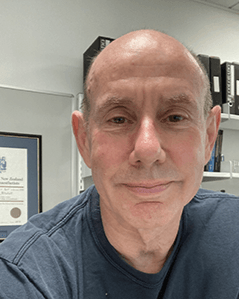
Dr. Simon Mitchell, MBChB, PhD, is a world-renowned specialist in diving medicine and physiology, with extensive clinical, academic, and operational experience. As a practicing physician, researcher, and professor in anesthesiology at the University of Auckland, Dr. Mitchell’s expertise spans the science of decompression, inert gas narcosis, oxygen toxicity, and neurological risks to divers. He has published extensively on diver central nervous system responses to gases and pressure, and regularly serves as an advisor and speaker at international conferences on technical and recreational diving safety. Dr. Mitchell’s work is widely cited by dive medicine professionals for clarifying best practices in managing and mitigating CNS risks in both routine and extreme underwater environments.
Both Dr. Pollock and Dr. Mitchell are widely recognized as leading subject matter experts on CNS-related health issues in divers, with decades of field-defining research, clinical experience, and international authorship in the field of diving medicine.
“Evidence from thousands of hours of technical diving using PO₂ setpoints of 1.3 atm demonstrates CNS oxygen toxicity is exceedingly rare when procedures are followed. That said, there is never zero risk, and every diver should understand the factors—like high workload, CO₂ retention, or underlying health issues—that can tip the balance.”
Dr. Simon Mitchell, MBChB, PhD
“While the most recent data are reassuring for exposures at a PO₂ of 1.3 atm, particularly among experienced technical divers, we must remember that most of these dives are conducted by well-trained, well-monitored, and generally healthy individuals. There remains an element of individual variability—and thus, a need for vigilance and self-awareness on every dive.”
Dr. Neal Pollock, PhD
Garmin vs. Shearwater vs. Suunto for PPO2 tracking
“The best safety tool remains the one between your ears. Use these new limits as a reason to become a smarter, more informed diver.”
[amazon table=”5561″]
Contrasting Perspectives: Medical Societies and Professional Organizations
While the consensus panel of experts (including Pollock and Mitchell) led the endorsement, several medical and operational groups urge a slower, more conservative approach for broader populations:
- European Underwater and Baromedical Society (EUBS): Recognizes technical field evidence but emphasizes limited population-wide data and calls for careful implementation and more prospective studies.
- Undersea & Hyperbaric Medical Society (UHMS): Supports new limits for healthy, technical divers but recommends strict monitoring and conservatism for youth, older, or recreational divers.
- Diving Medical Advisory Committee (DMAC): Maintains lower PO₂ limits for commercial divers due to unpredictable work, variable fitness, and the need for operational safety.
Table: Medical Society Positions
| Society | Viewpoint | Concern |
|---|---|---|
| EUBS | Prospective diver studies needed; adopt guidelines with care | Data gaps |
| UHMS | Fine for technical; caution for rec/youth; stress monitoring | Group vulnerabilities |
| DMAC | Conservative limits for work/occupational dives | Workload, fitness |
Ongoing Debates and Cautions
“While the data supports these longer times, it’s crucial to remember we’re dealing with probabilities, not certainties.”
Diver forums and leading instructors echo both the benefits and the risks:
- Many technical divers exceed old NOAA limits safely, but emphasize that “zero risk is unachievable underwater.”
- Medical specialists call for individualized CNS and pulmonary risk planning, especially for beginners, divers with health conditions, or those facing unpredictable exposures.
- Commercial operators frequently enforce stricter PO₂ limits (1.2–1.3 atm) and cumulative exposure rules regardless of guideline updates.
Next Steps for Divers and Instructors
The 2025 oxygen exposure limits mark a pivotal moment for dedicated divers. By embracing updated training and leveraging modern technology, you can safely extend your underwater adventures.
Take the Next Step: The best way to integrate these new limits into your diving is through proper education. If you’re ready to push your boundaries, we recommend exploring an Advanced Nitrox and Decompression Procedures course with your local dive shop. And to manage these new parameters flawlessly, a robust dive computer is essential. Check out our guide to the Best Dive Computers for Technical Divers to find a model that will grow with you.
- Updated dive tables and course materials are expected from NOAA and the major training/certifying agencies through 2026, with ongoing interim guidance.
- Recreational divers should rely on standard PO₂ limits (≤1.4 atm) unless formally trained for higher exposures.
- Technical divers should monitor both CNS and pulmonary “clocks,” maintain situational awareness per new guidelines, and prepare contingency plans for unplanned exertion or retention of CO₂.
- Commercial and scientific teams must continue organizational risk assessment, pending further population-wide research and operational validation.
Why Does This Matter for Us Divers?
Progress with Prudence
This update is more than just new numbers in a dive table; it’s a reflection of how far diving has evolved. These changes, built on decades of research, challenging navy studies from the mid-1950s, and practical experience from the technical diving community, empower us to explore further and stay longer in the environments we love. However, they also place a greater emphasis on personal responsibility. As Dr. Mitchell wisely notes, we are not all the same. This evolution is a call for every diver to deepen their education, listen to their body, and use technology, such as modern dive computers, not as a crutch, but as a tool for making more informed and conservative decisions. It’s about striking a balance between the incredible new potential and an unwavering commitment to safety.
Stay Within Safe O2 Limits With these Portable NITROX Analyzers
These are ideal for verifying nitrox mixes, calibrating your gas fills, and keeping your dive profile within NOAA and Navy guidelines.
[amazon table=”5583″]
As an Amazon Associate, Scuba Insider may earn a small commission from qualifying purchases at no additional cost to the customer.
References
Hoyt, J. T., Murphy, F. G., Pollock, N. W., Kernagis, D., Bird, N., Menduno, M., Bright, J., & Mitchell, S. J. (2025). Revised guideline for central nervous system oxygen toxicity exposure limits when using an inspired PO2 of 1.3 atmospheres. Diving and hyperbaric medicine, 55(3), 228–236. https://pubmed.ncbi.nlm.nih.gov/40986922/
Diving and Hyperbaric Medicine. (2025). Revised guideline for central nervous system oxygen toxicity in diving: A consensus approach. Diving and Hyperbaric Medicine Journal. https://www.dhmjournal.com/images/IndividArticles/55Sept/Hoyt_OxygenGuideline_2025.pdf
Diving Medical Advisory Committee. (2025). Guidance on oxygen exposure management (DMAC 35). DMAC. https://www.dmac-diving.org/guidance/DMAC35.pdf
European Underwater and Baromedical Society. (2025). Position statements and resources on oxygen exposure in diving medicine. EUBS. https://pubmed.ncbi.nlm.nih.gov/40986922/
Hoyt, R., Mitchell, S., & Pollock, N. (2025). Expert commentary on oxygen exposure in diving: Emerging consensus and implications. Personal communications and published commentary. (Referenced in Diving and Hyperbaric Medicine).
Mitchell, S., & Pollock, N. (2025). Expert commentary on oxygen exposure management in diving. InDEPTH Magazine. https://indepthmag.com/oxygen-exposure-management/
National Oceanic and Atmospheric Administration (NOAA). (2025). Diving standards and safety manual (Rev. ed.). NOAA Office of Marine and Aviation Operations. https://dan.org/health-medicine/health-resources/diseases-conditions/oxygen-toxicity/
Undersea and Hyperbaric Medical Society (UHMS). (2025). Oxygen exposure and diving safety resources. UHMS. https://www.frontiersin.org/journals/physiology/articles/10.3389/fphys.2020.01105/full
X-Ray Mag. (2025). New oxygen exposure limits proposed for divers. X-Ray International Dive Magazine. https://xray-mag.com/content/new-oxygen-exposure-limits-proposed
ScubaBoard. (2025). New CNS oxygen exposure limit for 1.3 atm (forum discussion). https://scubaboard.com/community/threads/new-cns-oxygen-exposure-limit-for-1-3-atm.663497/
Scuba Diving Magazine. (2025). Understanding CNS oxygen toxicity: Training and instruction guidelines. Scuba Diving. https://www.scubadiving.com/training/basic-skills/instruction-cns-oxygen-toxicity
DeDePu Dive. (2025). How deep on 100% oxygen? Four depth restriction rules explained. DeDePu Dive Blog. https://dedepudive.com/en-au/blogs/blog/how-deep-on-100-oxygen-4-depth-restriction-rules
Pollock, N. W. (n.d.). Neal W. Pollock, PhD. Canadian Undersea and Hyperbaric Medicine Association. Retrieved October 4, 2025, from https://cuhma.ca/neal-pollock.html
Mitchell, S. (n.d.). Professor Simon Mitchell, MB ChB, PhD, DipAdvDHM (ANZCA), DipOccMed, FUHM, FANZCA. Diving and Hyperbaric Medicine. Retrieved October 4, 2025, from https://www.dhmjournal.com/index.php/simon-mitchell
1715 shipwreck treasure diving is a common event in Florida,…
1715 Shipwreck Treasure Diving: Florida’s Accessible Shipwrecks Still Yielding Gold
Ocean Restoration: How Red Tape Prevents Marine Ecosystem Recovery Last…
Ocean Restoration Regulations Delay Reef Recovery: Scientists Speak Out (2025)
The health of the Indian Ocean’s marine environment is more…
Indian Ocean Conservation: What It Means for Divers & Why It Matters
NOAA and leading agencies have doubled recommended dive time at…
Oxygen Exposure Limits for Divers (2025): Endorsements, Cautions, and Expert Opinions
An experienced diver drifted ~40 minutes off a Maldivian resort…
Diver Left Adrift in Maldives: Official Inquiry and Right of Reply Issued
The diving community mourns the loss of Virginia diver Mark…
Cooper River Diving Tragedy: Remembering Mark Beckler
Recent Articles…

Readers, please be aware that the statement made about IANTD in this article is inaccurate. IANTD did not made any comment neither was consulted or endorsed.
“nearly all major training agencies (PADI, TDI/SDI, IANTD, GUE, NAUI, RAID) have backed the limits, with most training/certifying agencies expected to update their technical manuals, instructor guides, and dive tables by mid to end of 2026.”
Again the statement above as far as IANTD position is inaccurate.
Respectfully,
Luis Augusto Pedro
IANTD CEO
Luis, thank you for taking the time to clarify IANTD’s position directly. I sincerely apologize for the inaccuracy in the article.
You’re absolutely right—I should not have included IANTD in that list without direct confirmation from your organization. I’ve updated the article to reflect this correction, revised the paragraph to more accurately state that adoption timelines and agency positions remain unclear, and added an editor’s note documenting the correction.
I genuinely appreciate you reaching out to set the record straight. This kind of direct feedback from agency leadership helps ensure accuracy in diving safety reporting.
If IANTD does develop a position on the revised oxygen exposure guidelines in the future, I’d welcome the opportunity to report on it accurately.
Thank you again for the correction.
Best regards,
John
Editor