
The Coral Crisis and a Call to Action
The Great Barrier Reef (GBR) is in crisis, and divers worldwide are asking how divers can help coral reefs survive in the face of climate change and local stressors. The GBR, a UNESCO World Heritage site and one of the world’s most iconic ecosystems, is in peril. Earlier this month, the Australian Institute of Marine Sciences (AIMS) released its Long-Term Monitoring Program report, which reveals steep declines in coral cover, underscoring the urgent need for action. Yet, in the face of grim statistics, young innovators are stepping forward with ideas that blend creativity, science, and community. Their message is clear: while reefs are in crisis, resignation is not an option (AIMS, 2025).
Why it matters
Coral reefs support nearly 25% of all marine life, protect coastlines from erosion, and provide food and income for millions of people worldwide. Their decline is not just an environmental story — it’s a social, economic, and cultural one. What happens on the Great Barrier Reef echoes across the globe, making the response of youth innovators more than inspiring — it’s essential.
A Sobering Report from Australia
Extent of the Decline
Regional losse
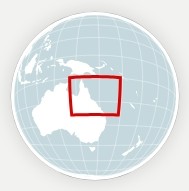 The 2024/25 Long-Term Monitoring Program from the Australian Institute of Marine Sciences (AIMS) found that coral cover on the Great Barrier Reef has fallen sharply:
- Northern region: coral cover dropped from 8 % to 30 %.
- Central region: fell from 2 % to 28.6 %.
- Southern region: declined from 9 % to 26.9 % (AIMS, 2025).
For divers who return to the same reefs year after year, the changes are startlingly clear — once-vivid dive sites now appear pale and lifeless.
Widespread impact
Across 124 reefs surveyed between August 2024 and May 2025, 48% experienced a decline in coral cover, a result linked to large-scale bleaching events (World Economic Forum, 2025).
Causes and Consequences
Drivers of decline
Heat stress from climate change remains the dominant driver. Added to this are destructive tropical cyclones and outbreaks of crown-of-thorns starfish (World Economic Forum, 2025).
Shorter recovery
The intervals between bleaching events are shrinking, leaving reefs with less time to recover. As the AIMS report warns: “An elevated disturbance environment means that the intervals for recovery are becoming shorter” (World Economic Forum, 2025).
Young People Haven’t Given Up
Shalise Leesfield’s Living Seawalls
Though not a dive site, projects like this remind divers that artificial structures — even marina walls — can be engineered to support marine life, echoing the way shipwrecks often evolve into thriving dive habitats.
Vision and Funding
In 2022, 15-year-old Shalise Leesfield was named Scuba Diving Magazine’s Sea Hero of the Year and received a $5,000 Seiko prize. She used the funds to design and install Living Seawalls in Port Macquarie, Australia. See her YouTube video here.
3D-printed innovation
Her project utilized 3D-printed tiles — hexagonal modules, swim-throughs, crevices, and honeycomb panels — designed to mimic natural habitats and retrofit sterile seawalls.
“Each tile’s hexagonal modules, swim-throughs, crevices, and honeycomb panels were chosen to replicate microhabitats. Crevices retain water at low tide, honeycombs capture algae, and swim-throughs allow small fish to dart inside (Scuba Diving, 2022).”
— Shalise Leesfield, Sea Hero of the Year
Measurable impact
The results were immediate: biodiversity surged, with river snails, limpets, crabs, and even stingrays returning to previously barren walls. Leesfield hopes her work inspires others and reminds young conservationists:
“Fundraise; it’s the best way to get a project like this off the ground (Scuba Diving, 2022).”
— Shalise Leesfield
Why it matters
Coastal cities worldwide are lined with sterile seawalls that erase natural habitats. Projects like Leesfield’s prove that even small retrofits can transform urban coastlines into biodiversity hotspots. Her work shows how youth-driven design and ecology can be scaled globally.
Lenuk Tasi: Student-Led Sea Turtle Conservation
Many divers list sea turtles as their most cherished underwater encounters. By safeguarding nesting sites, Lenuk Tasi ensures future generations of divers will still share the water with these iconic animals.
Founding and Mission
In 2023, 24-year-old marine science student Jinu Braz Araújo founded Lenuk Tasi (meaning “sea turtle” in Tetum) in Timor-Leste. His team of ten student volunteers patrols beaches near Kasait to locate and relocate turtle nests.
“After hours of searching, sometimes we recognize a plundered nest by the absence of any baby flipper prints in the sand. But perseverance keeps the team motivated (Scuba Diving, 2023).”
— Jinu Braz Araújo, Founder of Lenuk Tasi
Innovative egg protection
To reduce poaching, volunteers buy clutches of eggs from locals for about US $20. However, protecting one nest can cost US $200, roughly a month’s salary in Timor-Leste.
“Each successful rescue can cost the equivalent of a month’s salary (Scuba Diving, 2023).”
— Jinu Braz Araújo
Education and outreach
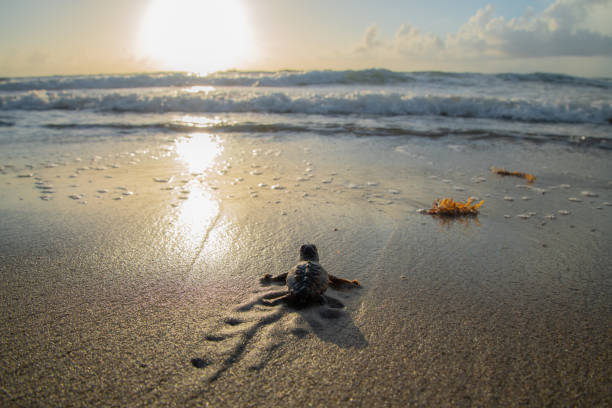
Lenuk Tasi stages public hatchling releases at dusk, turning conservation into a community event that educates villagers and tourists. The group also hopes to build a conservation centre with training rooms and school programs (Scuba Diving, 2023).
Why it matters
Sea turtles are keystone species: their survival affects entire marine ecosystems, from seagrass beds to coral reefs. By blending conservation with community economics, Lenuk Tasi illustrates a replicable model for grassroots action in coastal regions facing similar pressures.
New Concepts and Technologies Moving Forward
As divers, we’re uniquely positioned to support and even test new technologies — from reef restoration structures to AI-driven reef monitoring that could one day integrate with diver-collected data.
Reef adaptation and recovery interventions
Combining innovation and policy
The AIMS report emphasizes that saving coral reefs will require global greenhouse-gas reductions, better local management, and interventions to support reef adaptation and recovery (World Economic Forum, 2025). Practical examples include Leesfield’s Living Seawalls and Araújo’s Lenuk Tasi turtle protection.
Youth and community science
Grassroots innovation
These youth-driven initiatives show how 3D-printing, grassroots conservation, and local knowledge can be scaled to other regions. They highlight how students and communities are not just participants but leaders in marine science and conservation.
Conclusion: Turning Grim News into Motivation
Hope through action
From despair to determination
The 2024/25 coral reef report is sobering, but the global response from young conservationists demonstrates that despair can transform into determination. From 3D-printed seawalls to turtle patrols on remote beaches, the next generation is proving that innovation and persistence can protect fragile ecosystems.
Recent breakthroughs remind us that nature can rebound when given the chance. For example, the successful Pillar Coral Spawns on Bonaire: A Historic Conservation Win shows how divers and researchers working together can turn fragile hope into real progress. Similarly, global initiatives like those in How Divers Gave Back: A Global Look at Marine Conservation, July 2025 demonstrate that the diving community is already a powerful force for positive change.
TAKE ACTION FOR CORAL REEFS
SUPPORT ONE OR ALL OF THE FOLLOWING

Great Barrier
Reef
Foundation
Australian Marine Conservation
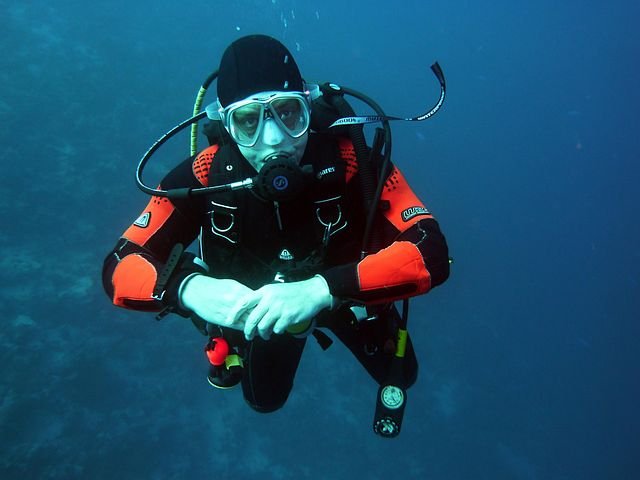
Master Buoyancy Control: Guide for Beginners

How Divers Gave Back: Marine Conservation, 2025
Why it matters
The crisis of coral reefs is not isolated. It reflects humanity’s relationship with the oceans — and the solutions crafted by youth are reminders that resilience, creativity, and determination can outpace despair.
For the scuba community, these stories hit especially close to home. Coral reefs are our classrooms, sanctuaries, and playgrounds. Their decline shapes the quality of every dive, while their recovery ensures future generations can still experience the wonder we feel underwater. By embracing eco-diving practices, supporting conservation groups, and amplifying the voices of youth innovators, divers are uniquely positioned to be both witnesses and guardians of the reef.
As divers, we’re the eyes and voices of the ocean. Every eco-conscious choice — from buoyancy control to reef-safe sunscreen — helps.
Support reef conservation groups, donate to youth-led projects, and share these stories. Together, we can ensure future generations of divers experience reefs alive with color and life.
