
Keyword(s): Divers give back July 2025
From coral restoration in Florida and the Red Sea to citizen‑science surveys and shipwreck documentation
In July 2025 scuba divers showed that recreational and professional diving can be a powerful force for marine conservation. Around the world, volunteers joined restoration dives, citizen‑science surveys, artificial reef projects, shipwreck documentation, and educational workshops. These efforts spanned coral reefs in the Florida Keys, Papua New Guinea, and the Caribbean, training programs in Australia and Indonesia, citizen‑science campaigns in the United States and the Red Sea, and even family snorkel adventures. This post synthesizes news, forum posts, and official reports to provide a panoramic look at how divers gave back. July 2025.
Table of Contents
Add a header to begin generating the table of contents
Scroll to Top
Coral nursery maintenance and out‑planting
A major theme across the month was hands‑on coral restoration. In Florida, community dive centres organised coral nursery tours and out‑planting weekends at Islamorada. Force‑E Scuba Centers conducted a weekend dive trip, 25 – 26 July 2025 where divers participated in a pre-dive Zoom workshop on coral biology and disease before heading out on 26 July for an in‑person coral nursery tour, hands‑on coral fragmentation workshop, and two‑tank out‑planting dive. Proceeds supported the I.CARE Foundation, showing how local dive operators linked education and fundraising.1
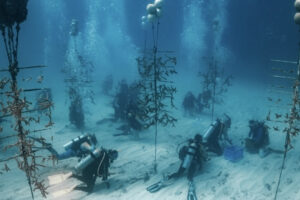
A similar hands‑on approach was highlighted by Explorer Ventures (Turks & Caicos) in a July news feature. Divers aboard the live‑aboard spent several days cleaning coral ladders, reattaching supports, and repositioning coral fragments while also performing fish and disease monitoring. Divers contributed by providing real‑time data for analysis. Their efforts supported part of the Iconic Reef Guardians program, a NOAA‑led initiative in the Florida Keys that trains recreational divers through Blue Star dive operators to tour and maintain coral nurseries and assess reef health. NOAA notes that healthy reefs underpin a US$2 billion tourism economy in the Keys; thus, every dollar invested in coral restoration yields an estimated US$1.40 in local economic benefit. The economic rationale helps convince local businesses to host and support restoration dives.2
The Coral Sea Foundation, in collaboration with their Sea Women Great Barrier Reef program, conducted a two-week training expedition at Goolboodi (Orpheus Island). An edition of Coral Sea News, dated July 24, 2025, highlighted this event, where indigenous female rangers learned skills such as snorkeling, underwater photographic surveys, GPS navigation, and maritime expedition coordination. The program aims to enhance leadership and conservation skills, enabling participants to monitor and protect their sea country. Reef surveys conducted during the expedition contributed to entries in the manta ray database and helped build community networks.3
Citizen science and reef monitoring
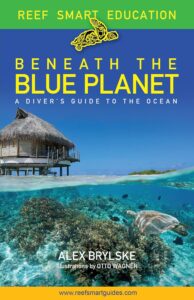 Citizen science continues to be a fundamental method for engaging divers. The Reef Environmental Education Foundation (REEF) hosted its annual Great Annual Fish Count (GAFC) in July, encouraging divers and snorkelers worldwide to record fish species and their abundance for the Volunteer Fish Survey Project. REEF’s July 2025 newsletter announced a matching donation campaign where contributions would be doubled, up to US$70,000, throughout the month to support fish surveys and other programs at reef.org. The newsletter also promoted online “Fishinars” and field survey trips scheduled for later in the year, demonstrating how activities in July can foster long-term engagement.4
In the Red Sea, the Red Sea Diving Safari resort announced it would conduct a Reef Check Eco Diver course and surveys in July 2025 as part of its eco-efforts program. The site highlights that Reef Check is the world’s largest coral reef monitoring organization, emphasizing the use of standardized indicator species for global data comparison. The July course invites certified divers to participate in surveys following their training, and the resort offers free training dives to participants. This reflects a growing trend among resorts to integrate citizen science into their tourism offerings.5
Back in the United States, REEF’s July newsletter also highlighted the Volunteer Fish Survey Project and field trips to Cayman Brac and Curacao scheduled for later in 2025. These programs illustrate how divers can become “citizen scientists” everywhere, from local reefs to distant islands.6
Veterans, students, and long‑term partnerships
 Marine restoration has incredibly positive implications, creating meaningful opportunities for both veterans and young people alike! Mote Marine Laboratory in Florida has forged an inspiring partnership with the Combat Wounded Veteran Challenge (CWVC) and SCUBAnauts International to host an engaging event at Looe Key this past July. According to Eco Magazine (29 July 2025), veterans and youth collaborated to install innovative coral trees, clear algae from existing structures, and maintain vital coral nurseries, making significant strides in marine stewardship. Mote’s president passionately highlighted the importance of adaptive and scalable restoration strategies, celebrating the success that arises from long-term collaborations.7
Similarly, an exciting summary in the Indo Ocean Project’s quarterly report for Raja Ampat (31 July 2025) showcased a plethora of impactful activities. Divers undertook 25 roving fish surveys, 10 benthic surveys, and several coral restoration sessions, all aimed at tracking fish biomass and coral health, while providing invaluable training to interns in marine research. This report also outlines ambitious plans to expand conservation efforts and enforce dive limits at Blue Magic, safeguarding our precious reefs. The future looks bright as each of these initiatives contributes to the health of our oceans and empowers individuals to play a vital role in marine conservation!8
Wreck documentation and maritime archaeology
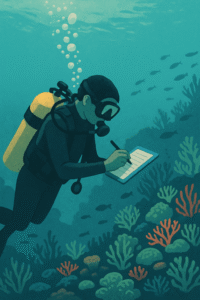 While coral restoration dominated July’s headlines, divers also assisted heritage conservation. SCUBAnauts International reported about a mission to Thunder Bay National Marine Sanctuary in Michigan (posted 23 July 2025). Ten divers partnered with NOAA researchers to document historical shipwrecks. Tasks included measuring anchors for the Big Anchor Project database and using underwater photogrammetry to create high‑resolution 3‑D models of wrecks. Divers also trained in cold‑water conditions and drysuit use. These citizen‑science dives preserve maritime heritage while expanding participants’ skills.9
Conclusion
July 2025 showcased the incredible potential of divers as active contributors to our oceans! They are not just visitors; they are builders, scientists, educators, historians, and mentors. From engaging in coral restoration workshops to participating in reef monitoring, veterans’ partnerships, and empowering indigenous women, divers around the globe are making a significant impact. These efforts not only boost local economies and create jobs but also restore vital ecosystems and strengthen communities. As we continue short write-ups about each regional story mentioned, I invite you to join a restoration dive, a Reef Check survey, or a community training program. Together, we can make a difference in the underwater world that needs more hands and hearts. We are doing a lot of good work out there, and I am proud to be a part of the diver community.
As an Amazon Associate, Scuba Insider may earn a small commission from qualifying purchases at no additional cost to the customer.


References
- https://www.force-e.com/reef-coral-restoration-weekend-dive-trip-2025.html#:~:text=Join%20us%20to%20help%20the,about%20coral%20biology%20and%20diseases
- https://www.fisheries.noaa.gov/feature-story/coral-reefs-fuel-floridas-economy-restoration-ensures-their-future#:~:text=July%2021%2C%202025
- https://coralseafoundation.net/coral-sea-news-july-2025/#:~:text=on%20both%20inshore%20and%20mid,to%20the%20global%20manta%20database
- https://www.reef.org/news/enews/making-it-count-july-2025#:~:text=July%20has%20arrived%2C%20and%20so,the%20Volunteer%20Fish%20Survey%20Project
- https://www.redsea-divingsafari.com/eco-efforts/reef-check#:~:text=Reef%20Check%20is%20the%20world%E2%80%99s,recreational%20divers%20and%20marine%20scientists
- https://www.reef.org/news/enews/making-it-count-july-2025#:~:text=July%20has%20arrived%2C%20and%20so,the%20Volunteer%20Fish%20Survey%20Project
- https://ecomagazine.com/news/coastal/vital-coral-reef-restoration-and-research-partnership-continues/#:~:text=Mote%20Marine%20Laboratory%20recently%20continued,success%20of%20its%20outplanted%20corals
- https://indooceanproject.org/quarterly-report-raja-july-2025/#:~:text=While%20the%20underwater%20beauty%20of,and%203%20Coral%20Restoration%20sessions
- https://scubanautsintl.org/thunder-bay-national-marine-sanctuary-shipwrecks/#:~:text=Diving%20Shipwrecks%20in%20Thunder%20Bay,National%20Marine%20Sanctuary
Related Articles
Suggest a Topic
What scuba topic should we dive into next?
Have an idea for gear, destinations, or conservation? Share your suggestion below—we may feature it in an upcoming post!
